Sustainability
For logistics companies, EV adoption is not simply a sustainability imperative. It must also reduce costs, improve rider productivity and solve operational challenges.

Taslima Khan
6 min read
Key takeaways:
Electrification must align with unit economics and operational needs
Targetted EV solutions can solve specific logistics bottlenecks
EV-as-a-Service model can soften the barriers to EV adoption
——
Last-mile deliveries cover the shortest distance in the supply chain, yet they are the most operationally intensive and expensive leg of the logistics value chain, accounting for nearly 50 to 60% of total shipping costs. Every additional kilometre travelled, every stop made and every minute spent on the road directly affects costs, service quality and rider productivity. As delivery volumes continue to rise, reducing the environmental footprint of these operations has become essential. Yet for logistics companies operating on thin margins, electrification will only scale if it also improves the economics of delivery.
Prashant Gazipur, Chief Operating Officer, In-city Operations at Delhivery says, "Electrification has to make last-mile deliveries easier for a rider while also improving the unit economics of the business. The core objective behind EV initiatives should be either save effort or cost, or ideally both.”
While electrification is still an evolving journey for logistics companies, including Delhivery, one thing we have clearly learnt is that sustainability cannot be pursued in isolation.
That philosophy fundamentally changes the questions we ask.
Rather than beginning with, How do we reduce emissions?, it is more useful to start with a simpler question: What operational problem are we trying to solve?
Can deliveries become more efficient? Can riders complete more shipments with less physical effort? Can vehicles be better matched to the shipments they carry? Can operating costs come down while improving the quality of work for our frontline workforce?
These questions are vital for last mile electrification as we pick an EV solution to solve a specific operational problem.
Operational Challenge 1: The Last Hundred Metres
In dense neighbourhoods, narrow streets and crowded markets of areas such as Old Delhi or parts of Mumbai, motorcycles and cars often become impractical. Riders frequently have to park their vehicles some distance away and complete deliveries on foot because the streets are simply too congested to navigate. Walking long distances every day, especially in tough weather conditions, not only increases physical strain but also limits the number of deliveries a rider can complete during a shift.
With nearly 65,000 delivery partners working with Delhivery every day, even small improvements in rider productivity can have a significant impact across the network.
So, the question to ask was: Can EVs reduce the physical effort involved in deliveries without compromising efficiency?
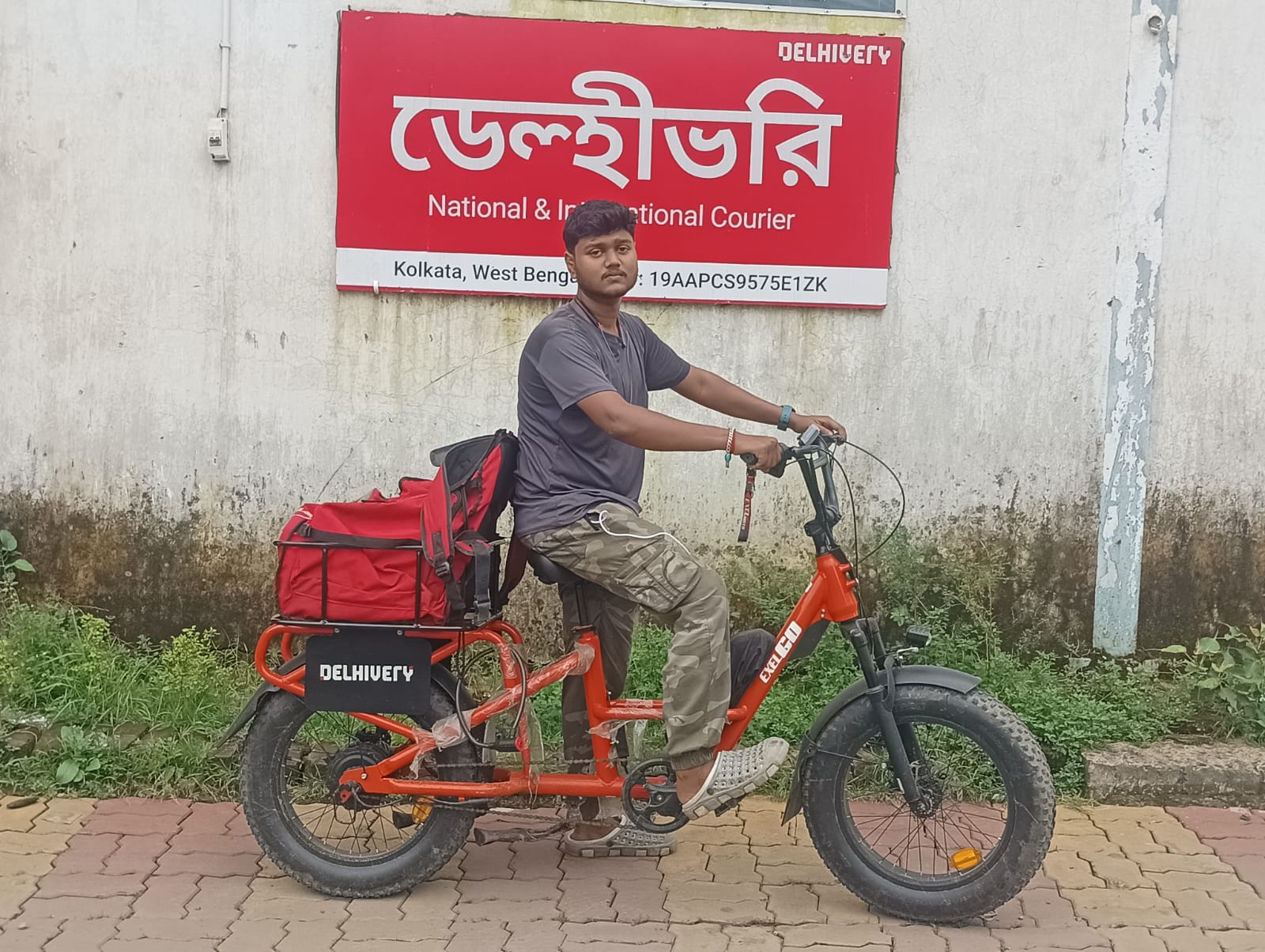
Working with multiple mobility partners, Delhivery is deploying e-cycles in high-density locations, starting with Mumbai. These vehicles are equipped with an integrated electric motor, battery and a controller to assist pedaling. The motorised boost helps ride longer distances and travel faster with less physical effort.
“As we are scaling deployment, we have seen rider productivity increasing by 30%, translating directly into higher earning potential for delivery partners,” says Prashant Gazipur.
Operational Challenge 2: Vehicle Mismatch
For large B2C express shipments, logistics companies have traditionally relied on popular intra-city vehicles such as the Tata Ace. While these vehicles are well suited for carrying bigger loads, they are often inefficiently utilised for the size and nature of the shipments being delivered, making them an expensive option for last-mile logistics.
Recognising this mismatch, Delhivery has adopted a new category of compact electric three-wheelers (L3 category), developed by manufacturers such as Zen Mobility and Bajaj. With a payload capacity of around 300 kg, these vehicles can be driven by the delivery partner themselves and can efficiently carry shipments such as shoe boxes and other relatively bulky e-commerce packages that are too large for a two-wheeler but do not require a full-sized light commercial vehicle.
The economics of this shift have been significant.
The hiring cost of a conventional larger vehicle, typically around ₹1,500 per trip, has fallen to nearly ₹500 with the L3 electric three-wheelers, resulting in savings of roughly ₹1,000 per vehicle per day. After piloting the concept for nearly one and a half years, Delhivery began scaling the deployment in earnest from November last year.
The first phase has already delivered cost savings of approximately 35% for transporting larger volumetric shipments in last-mile operations.
Beyond economics, the initiative also delivers measurable sustainability benefits. The deployment of around 1,000 L3 electric three-wheelers has effectively replaced approximately 1,000 Tata Ace vehicles from Delhivery's daily intra-city operations. As per Delhivery’s internal estimates, we are saving 102 gm of CO2 per km per vehicle for each Tata Ace replaced by an L3 electric 3-wheeler.
Operational Challenge 3: Rider Affordability
Affordability remains one of the biggest barriers preventing delivery partners from switching to electric vehicles. To address this, Delhivery has adopted an "EV-as-a-Service" model, wherein the company has partnered with multiple EV fleet aggregators to offer electric bikes on affordable daily rental plans.
“The objective is not only to accelerate EV adoption but also to lower the entry barrier for people who want to become delivery partners but do not own a vehicle,” says Prashant Gazipur.
The company's experience has shown that riders are largely technology-agnostic. Their primary concerns are practical: Is the vehicle affordable? Is it reliable? Will it help them earn more? When those questions are answered, EV adoption follows naturally.
The Final Take
Sustainability is often portrayed as a trade-off between profitability and environmental responsibility.
However, the future of sustainable logistics will not be determined by how many electric vehicles companies purchase and deploy. It will depend on how effectively they solve everyday operational challenges. Every successful electrification initiative begins with a business problem: reducing effort, lowering costs, improving asset utilisation or expanding access. When those problems are solved, sustainability follows as an outcome rather than an objective.
—————
About the author: Taslima Khan is building Thought Leadership at Delhivery. A former journalist with 18 years of experience across leading business publications, The Economic Times, ETPrime, Times Internet and Business Today, she has extensively covered India's logistics, supply chain and infrastructure sectors.
https://www.linkedin.com/in/taslima-khan-02b22b16/
These are the popular topics you might want to check out
Latest blog posts
View all blogs
Supply Chain Insights
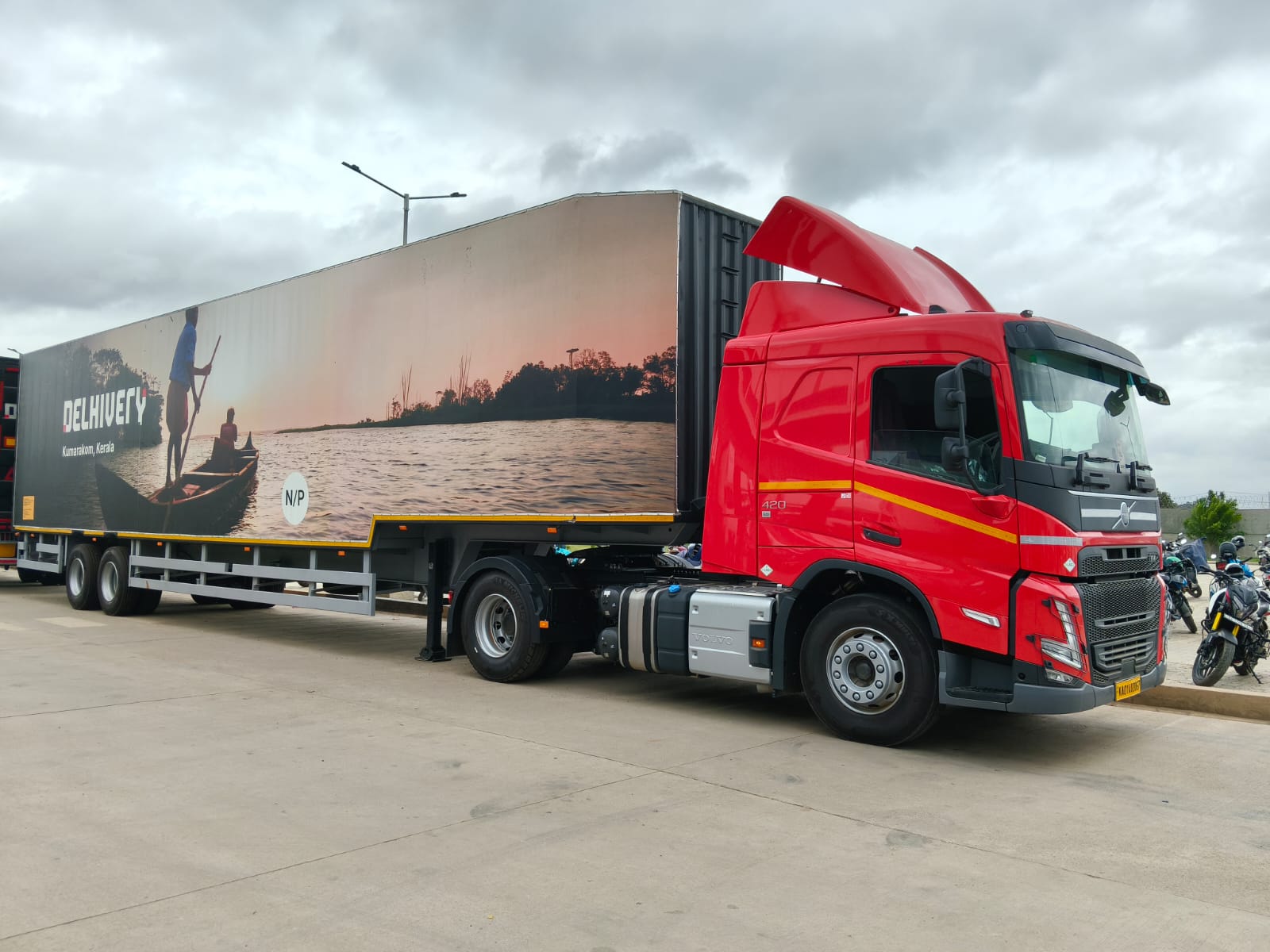
Power-Only Trucking: A Smarter Model for Long-Haul Freight
Smarter operating models can potentially make long-haul trucking with bigger trucks more efficient. Can Power-only trucking be a game-changer?
Taslima Khan
Engineering & Technology
Series: Finding India (Part I of II)
How a 15-member engineering team spent a decade using data generated by millions of deliveries and built a mapping platform for logistics.

Delhivery Engineering

Engineering & Technology
Series: Finding India (Part II of II)
How engineers taught machines to understand India’s complex addresses, transforming years of delivery data into a mapping intelligence platform built for logistics.
Delhivery Engineering
Ship with the largest integrated logistics company
Create your business account now
SERVICES
Delhivery One
Explore Now
Information Security Policy
Delhivery is committed to safeguarding the confidentiality, integrity and availability of all physical and electronic information assets of the organization. We ensure that the regulatory, operational and contractual requirements are fulfilled.
Disclaimer
Operational metrics listed are as of August 04, 2023