Future of Logistics
The role of frontline workers is evolving as they become critical to scaling operations. Investing in their welfare and career progression is therefore an operational necessity.

Prashant Gazipur
5 min read

Key takeaways:
Despite technology advancements, delivery partners, warehouse workers and drivers remain critical for scaling logistics operations.
A strong welfare program connects performance with protection. However, temporary dips in performance levels due to circumstances such as illness or accidents need to be factored in.
Attrition in frontline workers translates into repeated hiring and training costs besides inconsistent customer experience. Worker welfare is therefore critical to operational stability.
——
Technology will continue to reshape logistics. Artificial intelligence will improve planning. Mapping systems will become smarter. Automation will make warehouses more efficient.
But someone will still need to knock on a customer's door.
So while technology has undoubtedly made logistics faster and more efficient, it has not made the work any less physical. Every shipment ultimately depends on people willing to do demanding physical work every single day. A delivery partner rides through heavy traffic, scorching summers and monsoon rains. A sortation associate still spends long hours moving freight inside warehouses.
Since the physical element in logistics is unlikely to change anytime soon, therefore, one of the industry's biggest operational challenges remains human: workforce welfare and stability.
Frontline Workers Anchor Logistics
As per Redseer Gig Internet Workforce Report: 2026 across business segments like food delivery, quick commerce and ecommerce delivery, India had 2.4 million gig workers as of CY 2025. This number is expected to swell to 5 to 7 million by CY 2030. The gig economy is attracting workers because it is flexible by design, easy to enter and valued by workers. Workers increasingly see it as a stop-gap for short-term earnings or for immediate financial needs such as funding education.
For logistics companies, frontline workers are the most visible face of the company, shaping customer experience every day. Yet they face serious physical and financial risks in keeping the network moving. Investing in their health and financial security is therefore increasingly becoming an operational necessity.
The reason we call them frontline workers is because they are helping us grow our business being at the front of delivery and pickup operations. If these people do not work or do not come on time, business and service levels suffer massively.
Every time an experienced rider leaves, companies have to recruit and onboard someone new. Training takes time, operational familiarity is lost and customer experience can become inconsistent. More importantly, since last mile operations remain heavily dependent on this section of the workforce, retaining them is critical for scaling last-mile operations.
Therefore, while companies need to attract more workers, they need to give them reasons to stay as well.
Redefine the Relationship
The role of a frontline worker has also changed.
Delivery partners today are expected to use smartphone applications, follow digital processes, respond to operational requirements, interact confidently with customers and exhibit proper etiquettes. As technology raises the expectations placed on the workforce, the relationship between companies and workers cannot remain purely transactional.
That is the thinking behind Delhivery's Abhayam, a welfare programme designed for over one lakh frontline workers, launched on 22 June, 2026. The benefits program is meant for all of Delhivery’s frontline workers which include driver partners, fleet drivers, workers involved in loading and unloading operations etc. Delhivery Abhayam Frontline Worker Welfare Program
Abhayam addresses two broad concerns of frontline workers. Firstly, for many of them, their biggest concern is often not today's delivery target but whether an illness, accident or financial emergency could disrupt the lives of those who depend on them. Like professionals in every other sector, riders worry about medical emergencies, their children's education, ageing parents, unexpected financial shocks and whether they can build a better future for their families.
Abhayam takes care of these worries with medical and accidental insurance. Additionally it provides scholarships for children's education, financial support for sporting talent, assistance for riders pursuing higher education, personal loans during emergencies and income tax filing support.
Make Benefits Meaningful
Instead of treating welfare and productivity as separate objectives, Abhayam links them together. So, once a frontline worker starts working with Delhivery, they progress from Beginner to Pro, Elite and then Legend based on operational performance metrics such as delivery completion, attendance and responsiveness. As they move through the tiers, they unlock higher levels of medical and accident insurance along with additional financial and family benefits. For instance, while a beginner avails INR 2 lakh medical insurance and Rs. 10 lakh accidental insurance, a legend which is the highest tier gets Rs. 5 lakh in medical coverage and Rs. 15 lakh in accidental coverage.
This creates a virtuous cycle: Better performance leads to better protection. Better protection reduces anxiety which improves retention and that consequently leads to operational consistency.
Since the rider is motivated to improve the tier, he will indirectly start working on those metrics so that his tier improves. Now when everybody starts working towards those metrics, our operational metrics as a whole will improve.
There is however, an important distinction in the way the program is designed.
A performance-linked programme can create a problem if workers fear that their benefits can disappear every time their performance dips. The program therefore factors in the understanding that incidents such as an accident or health issue may temporarily affect someone’s ability to work.
While linking benefits to performance is not new, the uniqueness of our program is that we do not move or shuffle people very frequently. If we upgrade people, they are going to stay in that upgraded tier for sometime. A worker starts getting benefits from the following month post joining, after a monthly evaluation exercise. If you meet the base conditions, you stay in the tier and if you need to upgrade, you have to do a slightly better job.
I believe the program will encourage people to be more focussed towards achieving specific targets. They know that customer experience related metrics will move them to a higher tier and get more benefits.
Build a Career Path
There is another question that is becoming increasingly relevant as logistics companies build larger frontline workforces: Should a frontline worker have a career path?
For Delhivery, the answer is increasingly yes.
The company operates thousands of delivery stations across the country, with teams responsible for receiving and sorting shipments, managing cash, coordinating riders and running multiple other processes. These create opportunities beyond frontline jobs such as parcel delivery.
A worker can potentially move from a delivery role into positions such as Associate Team Leader, Team Leader and Station Manager, and eventually into roles managing multiple delivery centres and larger teams.
Career progression is important because the physical nature of frontline work may not be sustainable for everyone over an entire career. After a certain point, workers may want a more settled role that does not require them to spend as much time on the road.
A career pathway can therefore change the nature of the relationship between a frontline worker and the organisation. A delivery job does not necessarily have to be the destination. It can be the starting point.
Make Benefits Portable
There is a bigger challenge to address.
Frontline workers often move between companies. A worker may shift from an ecommerce delivery platform to food delivery, quick commerce or another logistics company. Benefits tied entirely to a single organisation can therefore disappear when the worker moves.
I believe this is an area where the wider industry could eventually collaborate.
Instead of every company building completely separate systems of social protection, the industry could explore a larger ecosystem in which benefits and protections remain portable as workers move between organisations.
That would represent a significant shift in how the industry thinks about welfare: from company-specific benefits to worker-centric social infrastructure.
The Final Take
As logistics companies mature, investment in workforce welfare is likely to become as important as investment in technology. Just as routing algorithms and automation have become industry standards, comprehensive social protection may eventually become a competitive necessity rather than a differentiator.
Because in logistics, every digital innovation ultimately depends on someone who still delivers the final package.
——
Prashant Gazipur is Chief Operating Officer, In-city Operations at Delhivery. He is a proven business leader with 11+ years of experience across e-commerce, payments and financial services, having held key leadership roles at Amazon and Paytm.
https://www.linkedin.com/in/prashant-gazipur-4335ab14/
These are the popular topics you might want to check out
Latest blog posts
View all blogs
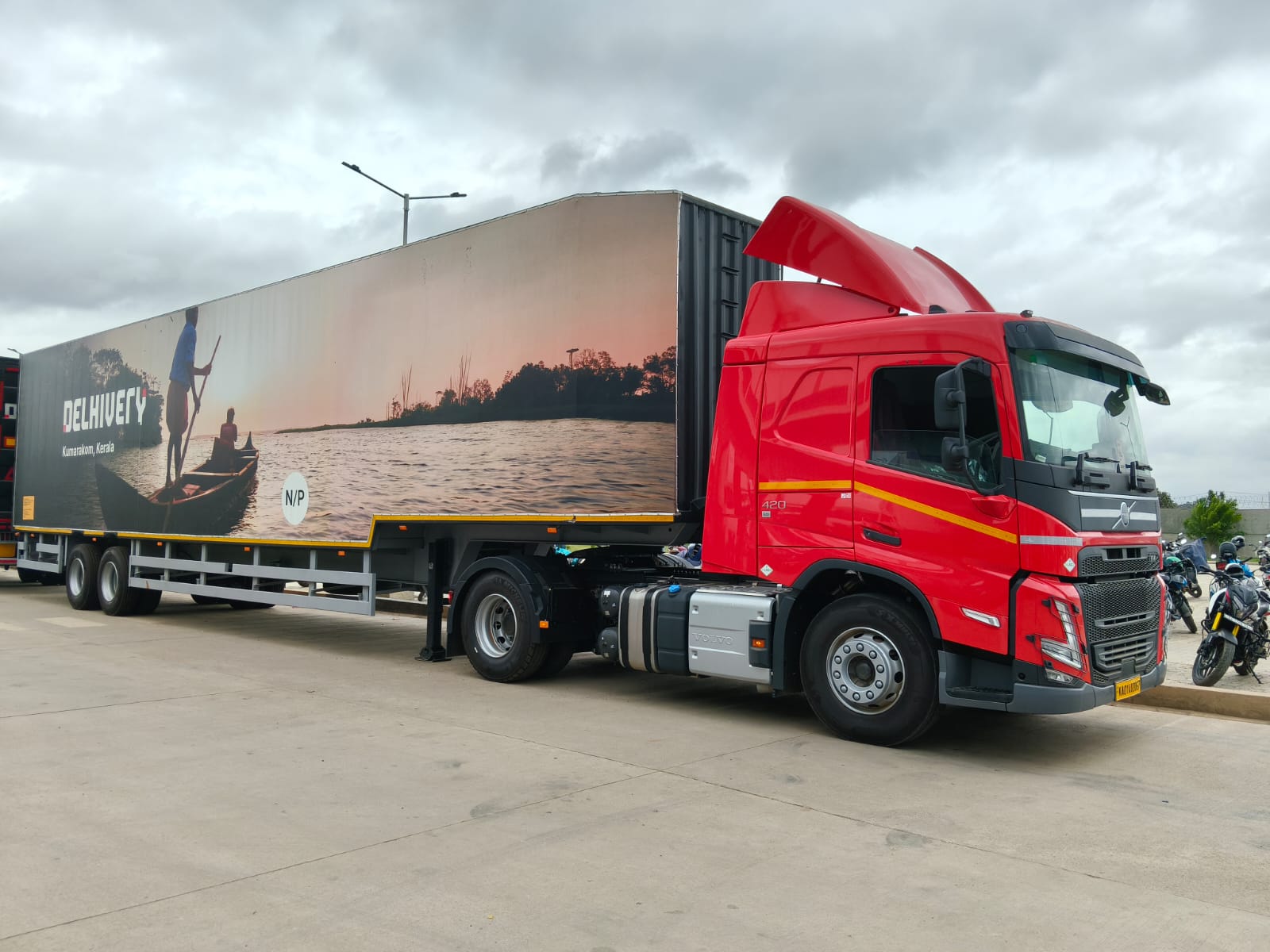
Supply Chain Insights
Power-Only Trucking: A Smarter Model for Long-Haul Freight
Smarter operating models can potentially make long-haul trucking with bigger trucks more efficient. Can Power-only trucking be a game-changer?

Taslima Khan
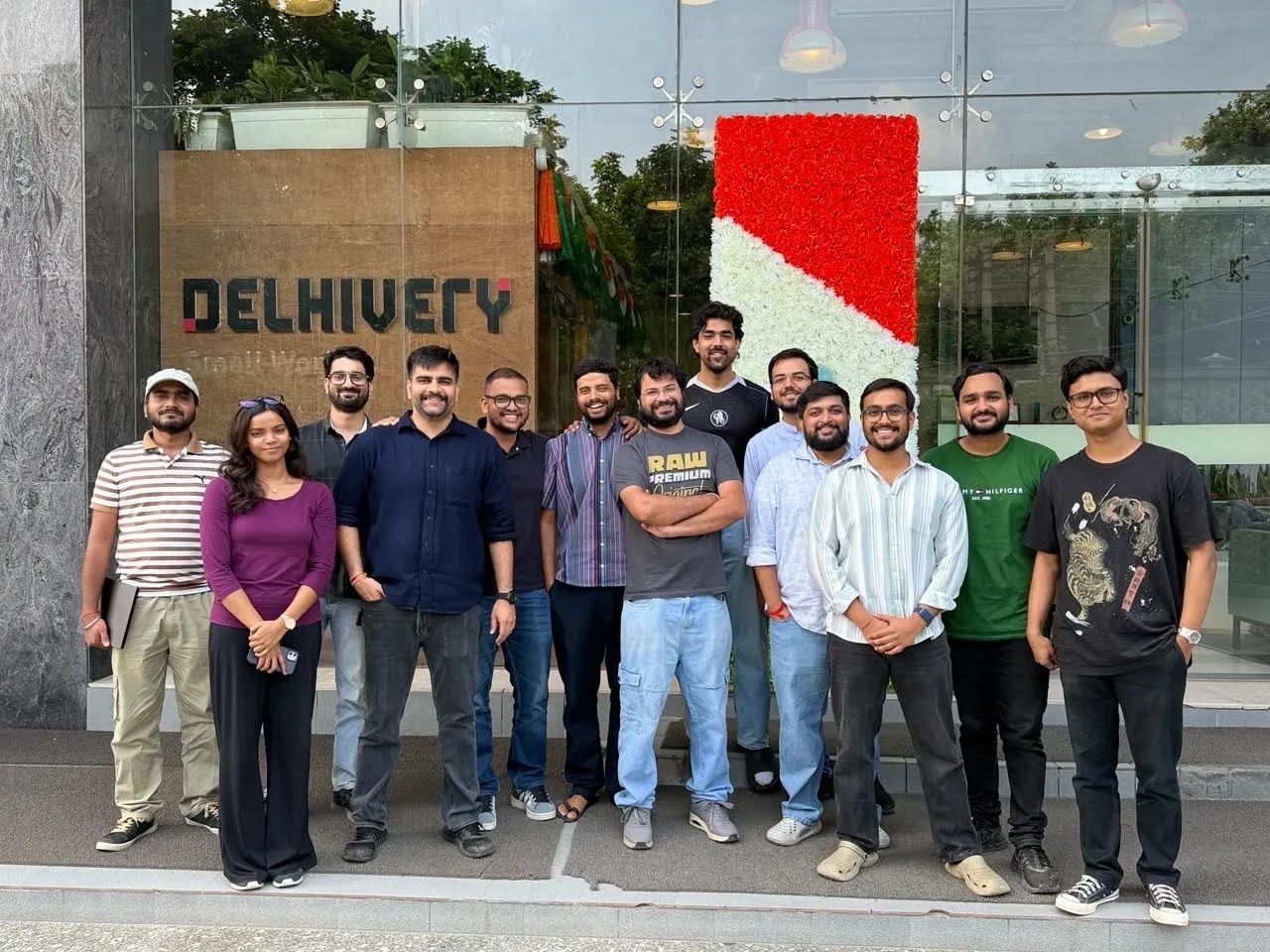
Engineering & Technology
Series: Finding India (Part I of II)
How a 15-member engineering team spent a decade using data generated by millions of deliveries and built a mapping platform for logistics.

Delhivery Engineering

Engineering & Technology
Series: Finding India (Part II of II)
How engineers taught machines to understand India’s complex addresses, transforming years of delivery data into a mapping intelligence platform built for logistics.
Delhivery Engineering
Ship with the largest integrated logistics company
Create your business account now
SERVICES
Delhivery One
Explore Now
Information Security Policy
Delhivery is committed to safeguarding the confidentiality, integrity and availability of all physical and electronic information assets of the organization. We ensure that the regulatory, operational and contractual requirements are fulfilled.
Disclaimer
Operational metrics listed are as of August 04, 2023